
Description
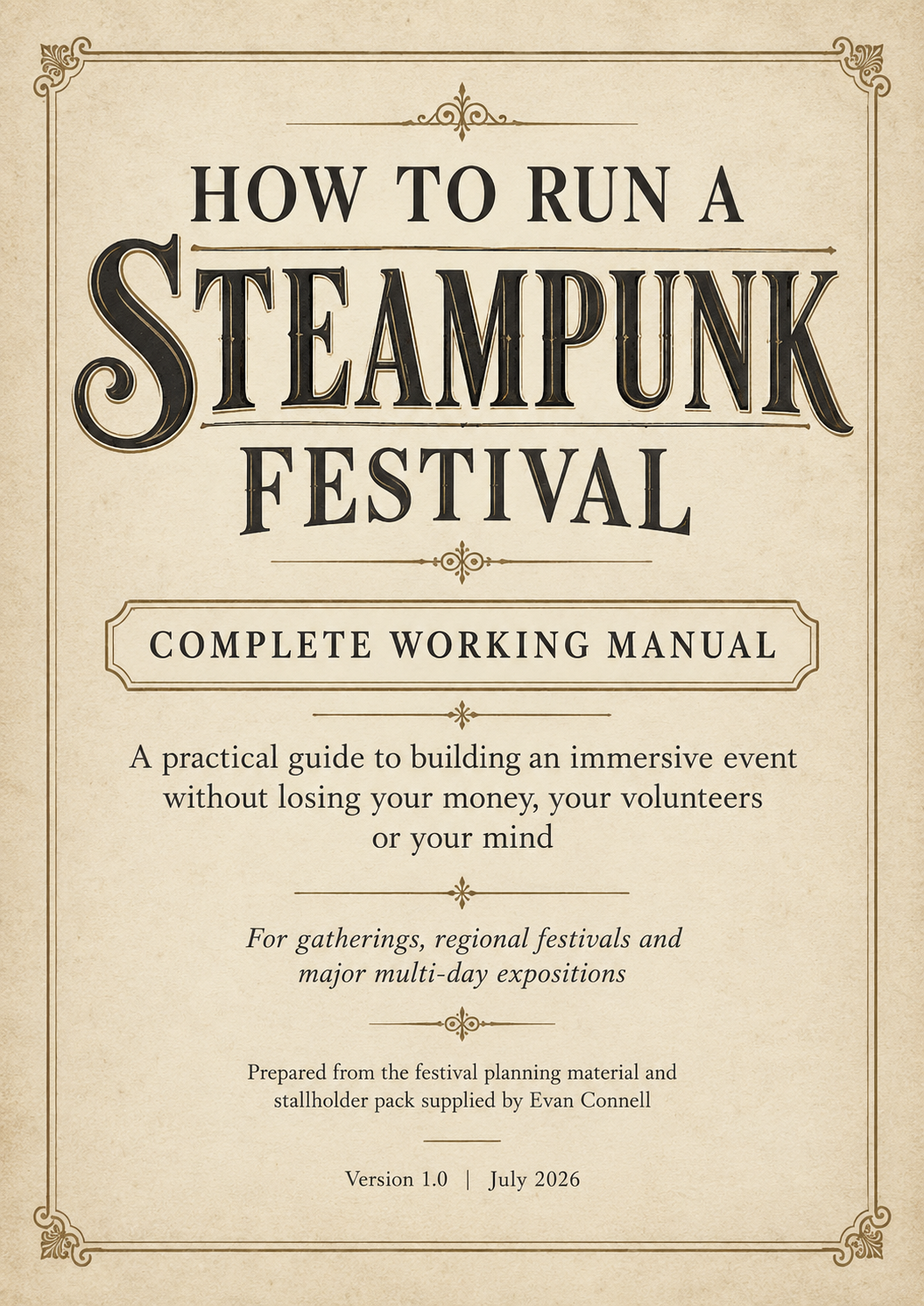
How to Run a Steampunk Festival
Complete Working Manual
A practical guide to building an immersive event without losing your money, your volunteers or your mind.
Running a steampunk festival sounds wonderfully simple.
Find a venue. Invite some traders. Book a few performers. Put up some posters. Add goggles.
Then reality arrives.
Budgets change. Volunteers disappear. Venues have rules. Stallholders need answers. Performers need schedules. Councils need paperwork. Weather changes. People argue. Someone loses the keys. Someone else has the only password. And sooner or later, somebody will ask you a question you had never even considered.
How to Run a Steampunk Festival was written for that reality.
This is not a book of vague ideas about creating a great event. It is a complete working manual for actually organising one, whether you are planning a gathering of 50 people, a regional festival attracting hundreds, or a major multi-day steampunk exposition. The manual specifically treats festivals as anything from small gatherings and markets through to town-wide celebrations and multi-day events.
It begins before the festival exists, helping you decide whether you have the right town, the right people, a viable concept and a realistic scale. From there it takes you through the organisation, systems, money, venue, program, people, marketing, safety and operational planning needed to turn an idea into something that can actually open its gates.
The manual covers:
- defining the festival, audience, format and scale
- choosing the right town, venue and date
- creating an immersive steampunk world without simply covering everything in cogs
- building an organising team and chain of command
- dealing with volunteers, personalities, conflict and people who do not deliver
- project management, responsibilities, deadlines and backups
- budgeting, financial controls, grants and sponsorship
- site planning, transport and visitor flow
- building the program
- managing markets, makers and stallholders
- performers, speakers and special guests
- volunteers and workforce welfare
- children and family activities
- marketing, branding and visitor communication
- ticketing
- websites, technology, passwords and data
- accessibility and belonging
- photography, media and privacy
- permits, insurance and legal obligations
- risk management and emergency planning
- child safety
- weather, cancellation and contingency planning
- security, props, replica weapons and crowd management
- food, alcohol, power and temporary structures
- the complete festival timeline
- the critical final eight weeks
- festival-day operations
- pack-down, debriefing and planning for the following year
- photocopiable working forms, checklists and templates for use throughout the event
The book is deliberately practical. It deals with the things that often cause events to fail: unclear authority, unrealistic promises, poor communication, missing backups, uncontrolled spending, undocumented decisions and allowing one person to become indispensable.
It also recognises something most event manuals overlook: festivals are built by people.
There are sections on keeping volunteers motivated, recognising the people who actually do the work, managing difficult behaviour, protecting the organiser from burnout and knowing when to stop arguing and simply keep the festival moving. As the manual puts it, the organiser’s job is not to personally carry every box. It is to make sure the boxes arrive.
The final section turns the book into something you can work from rather than simply read. It includes templates for project charters, task registers, meetings and handovers, role cards, budgets, grants, sponsorship, venue planning, risk and emergency management, volunteers, performers, stallholders, competitions, marketing, media consent, event-day control and post-event reviews.
At more than 240 pages, this is designed to become the organiser’s working reference from the first planning meeting until the last banner has come down.
For community groups, festival committees, steampunk clubs, tourism organisations, event organisers and anyone who has ever said, “We should run a steampunk festival.”
Before you do, read this.
It may save you money.
It may save your festival.
And it may just save your mind.
Reviews
There are no reviews yet.