
BEATRICE ‘TILLY’ SHILLING
You can be forgiven for never having heard of Beatrice Shilling, but WWII British fighterpilots were very pleased they knew her name and her accomplishment.
Beatrice ‘Tilly’ Shilling, born in 1909 in Hampshire, England was a woman who refused to be constrained by rules and customs. As a child she played with Meccano sets and spent her pocket money on penknives, and tools including an adjustable spanner. She even won a prize in a national Meccano competition. At fourteen she purchased a motorcycle and taught herself how to dissemble and reassemble a two-stroke engine. Most members of the Girl Guides had different interests, but ‘Tilly’ wrote an article on how to make a home wireless set.
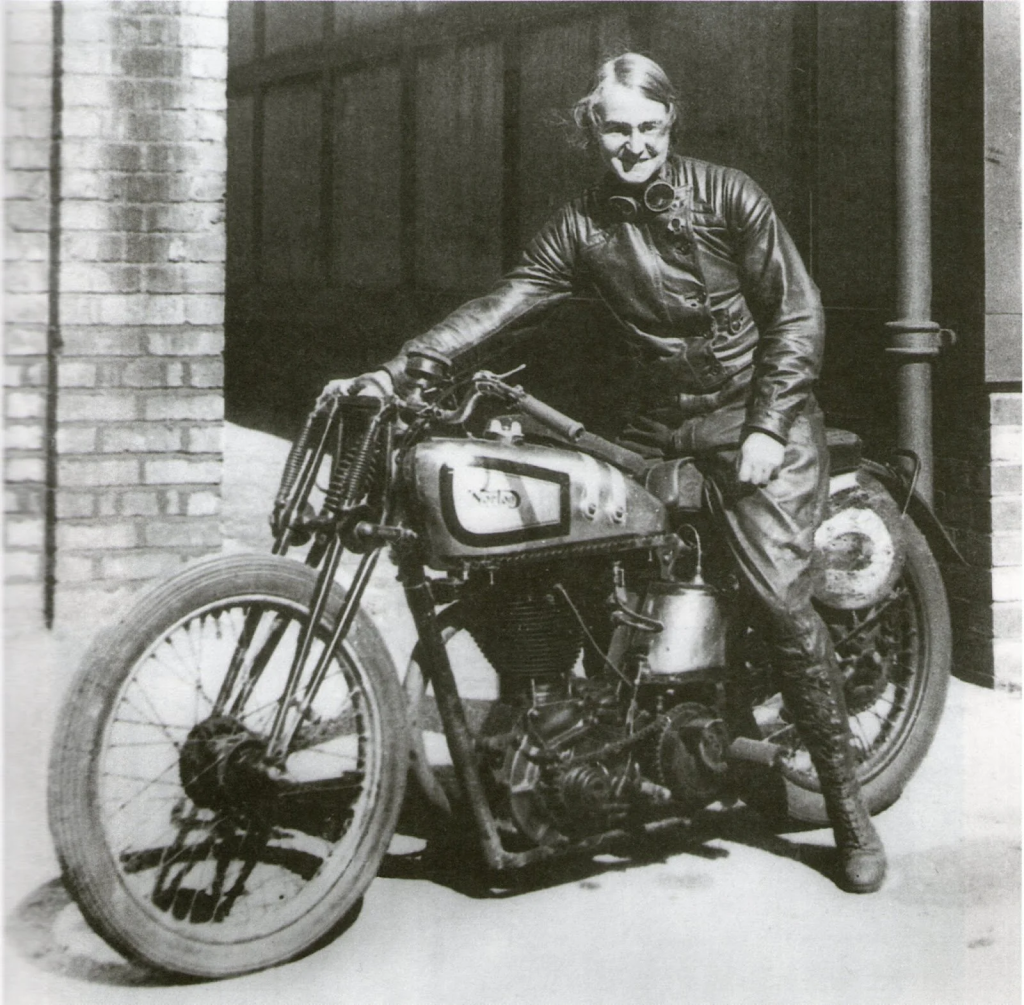
Obsessed with engines; after completing secondary school she worked for an electrical engineering company founded by Margaret Partridge, who believed female apprentices should be employed. ‘Tilly’ became skilled in installing wiring and generators but when she was found working on her own in a power station at night, the International Labour Organisation took action. Margaret Partridge commenced a campaign to overrule the archaic regulations concerning the employment of women and encouraged Beatrice Shilling to force her way into the then called Victoria University of Manchester, and the male-dominated field of mechanical and aeronautical engineering.
One of two women to graduate with a Bachelor’s Degree in Mechanical Engineering, ‘Tilly’ then completed a Master’s degree specialising in ‘mitigating piston temperatures in high-speed engines’. To increase her practical knowledge she took up motorcycle racing, even fitting her bike with a revolutionary supercharger which led to her being awarded a gold star by the Brooklands track for ‘outstanding track and road racing performances’. An interviewer suggested that the men had allowed her to win. She had lapped the Brooklands circuit at over 100 miles per hour on her Norton M30.
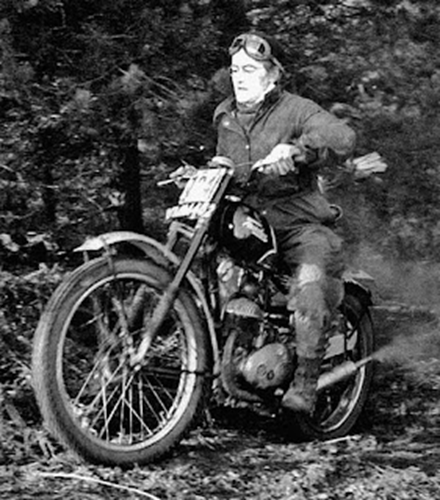
In 1936 the Royal Aircraft Establishment (RAE) took the unprecedented step of engaging this woman engineer. As the Battle of Britain ragedin 1940, Royal Air Force pilots of Spitfires and Hurricanes were plagued by a fatal flaw. As they dived and encountered negative g-forces, their Rolls Royce Merlin engines would flood and stall and even completely cut out. It could not only be fatal but affected manoeuvring in dogfights with the enemy. Spitfire pilots needed to urgently go into a half-roll to keep the fuel in the bottom recesses of the tank, to stay alive.
A small, dedicated team led by Beatrice Shilling was created to resolve the issue. It tested the belief of many when Beatrice devised an ingenious solution; a simple brass thimble with a central hole, a ‘baffle’, to be seamlessly fitted into the engine’s carburettor to stop fuel surge. This device served as a crucial stop-gap measure, preventing engine stalls throughout the war.
In 1947 ‘Tilly’ Shilling was appointed an OBE in recognition of her work. She continued her work with RAE until retiring in 1969. With her husband George Naylor, a former No. 625 Squadron bomber pilot, ‘Tilly’ ventured into racing cars which were tuned and modified in their home workshop and both husband and wife raced with success. In 1967, Betrice was sought to assist US Formula 1 driver and team owner Dan Gurney to resolve an overheating problem with his Eagle Mk1.
Beatrice ‘Tilly’ Shilling died in 1990 and only after 2011 were her achievements publicly recognised with memorials, university departments, scholarships and even a pub named in her honour. In 2021 a book aimed at girls 5-9 years of age written by Mara Rockliff and illustrated by Daniel Duncan was published to allow another generation to know of this pioneering woman.